General Knowledge Quiz
- 4.7
- Rating
- 5.00M
- Installs
- Free
- Price

 Analysis by App-foxy
I went into General Knowledge Quiz expecting a quick trivia time-killer, and that is exactly where it works best. It is a free trivia game from TIMLEG built around a continuous flow of general-knowledge questions rather than a large collection of extra modes or a story campaign. I can open it when I have a few spare minutes, answer several questions, and stop without feeling that I have left a match unfinished.
That simple approach is also the reason I would not recommend it to everyone. If you want animated competitions, a strong social layer, elaborate progression, or a carefully focused subject such as geography or science, this may feel too plain. If you enjoy testing what you know across unrelated topics and learning from the questions you miss, it is much easier to appreciate. In my experience, the game’s value comes from the rhythm of answering, checking myself, and trying again later.
How the current version feels in everyday use
The game is currently identified as version 1.0.3.4.7 and supports devices running Android 7.0 or later. That makes it suitable for many older phones as well as newer ones, which matters for a lightweight quiz game that people often install on a secondary or aging device. I would still check compatibility on the particular phone or tablet before planning to use it on a family device, but the operating-system requirement is not especially demanding.
You May Also Like

 Blood Strike: 2.5 Anniversary
Blood Strike’s Loadouts Turn Every Drop Into a Tactical Gamble
A close look at Blood Strike’s custom loadouts: how fast access to signature weapons reshapes its battle royale rhythm, rewards preparation, and narrows the gap between fights.

 Pandora - Music & Podcasts
Pandora’s Music Is Easy to Start, but Harder to Recover
Pandora’s strength is its low-effort path from a seed to a station. Its weak spot is how much confidence it asks you to place in connection, setup, and quiet recovery.

 8 Ball Pool
 Is Built on Rivalries, Rematches, and Routine
A close look at the rivalries, rematches, shared routines, and unanswered safety questions that turn a quick pool match into a persistent mobile community.

 Samsung Music
’s Quiet Strength Is Playing What You Already Own
Its reach comes less from spectacle than from dependable access to a personal library. That simplicity is both the app’s strongest retention engine and its ceiling.

 AccuWeather: Weather Radar
AccuWeather Review: A Quick, Clear Forecast for Everyday Decisions
For everyday plans, the best forecast is the one you can understand quickly. AccuWeather makes rain timing, radar, and local conditions easy to act on, with a few trade-offs.

 Hill Climb Racing
Why Hill Climb Racing Still Turns Crashes Into One More Run
A tiny car, a bumpy hill and one more upgrade: Hill Climb Racing keeps resurfacing because its simple chaos makes every near-miss feel personal.
More From Our News Desk
View All News


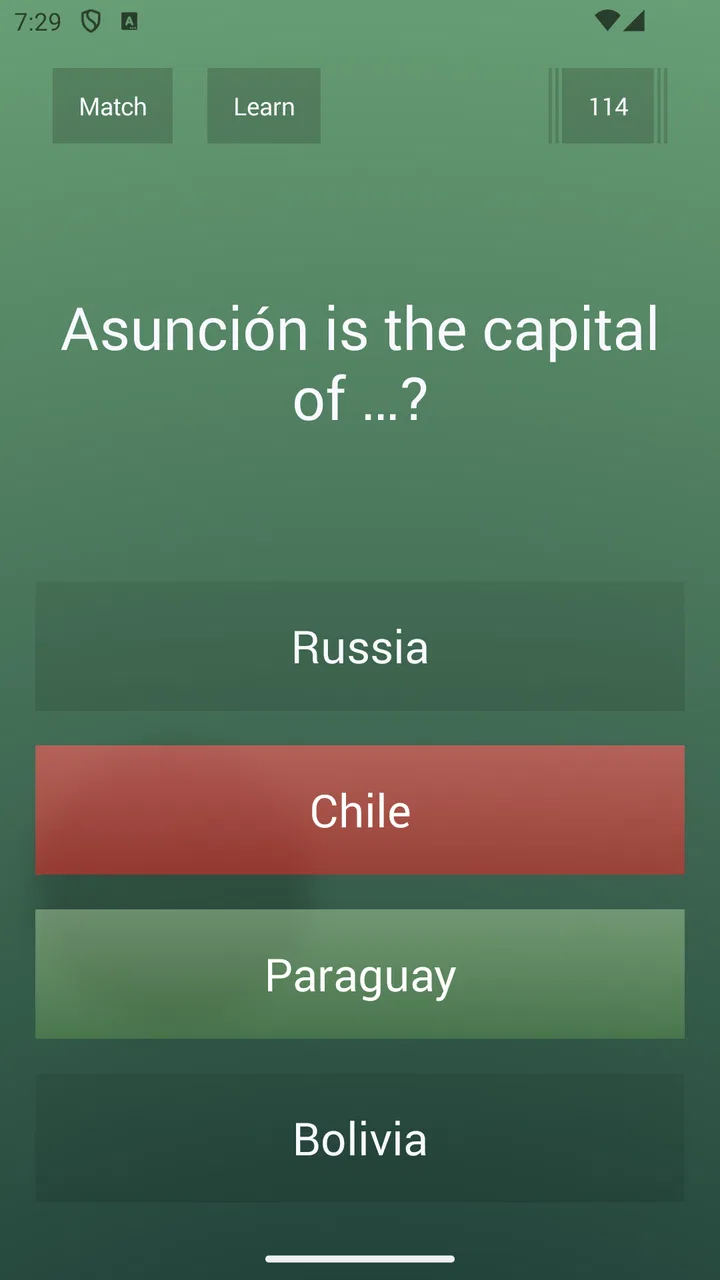
The basic experience is easy to understand. A question appears, I choose an answer, and the next challenge keeps the session moving. There is no need to learn complicated controls, build a character, or spend time arranging a team. That makes it a natural choice for a bus ride, a short break at work, or the few minutes before an appointment. The game asks for attention, but not the kind of uninterrupted concentration demanded by an action game.
What I like most is the broad subject mix implied by the general-knowledge format. A session can move from a familiar fact to something I have never encountered, then suddenly ask about a topic I thought I understood. That unpredictability keeps the game from becoming a simple memory test. It also exposes the difference between recognizing an answer and actually knowing why it is correct.
The audience is broad as well. The content rating is Everyone, so this is the sort of game I could suggest to a parent looking for a straightforward quiz for a child, provided the child is comfortable reading the questions and the adult is happy to discuss unfamiliar answers. It also suits adults who want a casual mental exercise without the pressure of a live opponent. The wording and subject difficulty will not feel identical for every player, but the format is approachable.
Its popularity gives the game some useful context. It has passed 5 million installs and holds a 4.7 average from roughly 71 thousand ratings, with about 1.9 thousand written reviews. Those figures do not replace personal testing, but they do suggest that the uncomplicated format has found a substantial audience. I can understand why: there is very little friction between deciding to play and seeing the first question.
A good fit for short, repeatable sessions
My most practical use for the game is as a replacement for aimless scrolling. When I have ten minutes, I can play a few rounds and leave with a handful of facts to look up or remember. It is especially useful when I want something interactive but do not want sound, fast reactions, or a complicated interface. The question-and-answer structure works well in quiet places where I need to keep the session discreet.
There is also a nice group use case. Two people can pass the phone back and forth and compare answers, turning a solitary quiz into an informal conversation. That works best when neither player treats every mistake as a competition. A wrong answer can become the interesting part, particularly when the question concerns history, language, culture, or a scientific detail that neither person expected.
One tip I found useful is to treat missed questions as prompts rather than failures. Instead of rushing immediately through the next item, I pause long enough to identify what made the wrong option tempting. This changes the game from a score chase into a small learning routine. It is a better approach for players who want to improve their general knowledge rather than simply prove that they already know a lot.
What the developer’s approach gets right
TIMLEG has kept the central idea clear: the game is about questions, not decoration. That focus makes it approachable for people who are put off by trivia apps that surround every answer with menus, currencies, avatars, or competitive systems. I do not need to understand a complicated economy before I can enjoy the content. The short path from opening the game to answering is a genuine strength.
The broad format also gives the game more replay value than a fixed list aimed at one narrow subject. A player who knows little about one area can still have a strong session because the next question may come from a completely different field. At the same time, that variety prevents me from relying on one specialty. Someone who is excellent at sports or entertainment trivia may still be challenged by questions outside that comfort zone.
The free price makes experimentation easy. I can install it without committing money, try several sessions, and decide whether the question style suits me. For a casual game, that is important because personal enjoyment depends heavily on the balance between familiar questions and genuinely difficult ones. A free download lowers the risk of discovering that the format is not for me.
The release date, March 8, 2016, also helps explain the game’s identity. This is not a new concept designed around the latest mobile trends; it is an established quiz experience that has had time to build recognition. The current version number shows that it has continued through updates, but I would not confuse a mature product with a constantly reinvented one. Its appeal is stability and directness rather than novelty.
How the current experience affects returning players
For an existing user, the strongest benefit is consistency. A player who already likes the question flow can return without relearning the game after every session. That is valuable for a title used in small bursts. I can put it down for a week and come back knowing exactly what kind of experience I am going to get.
The trade-off is that consistency can eventually feel repetitive. General knowledge is a huge subject, but the interaction itself remains familiar: read, decide, check, continue. If I play for a long stretch every day, the lack of a dramatic change in pace may become noticeable. My solution is to use it in short sessions rather than treating it as a primary game. It feels fresher when it fills spare moments instead of occupying an entire evening.
Players who care about measurable improvement may also need to create their own system. I find it helpful to remember categories that repeatedly cause mistakes and then read about those subjects outside the game. That turns the app into the starting point for learning rather than the complete learning environment. Someone looking for detailed explanations after every answer may prefer a dedicated educational platform instead.
Another practical point is the difference between playing alone and playing with others. Alone, the game is calm and convenient. With friends, it can create conversation, but it does not automatically provide the structure of a formal multiplayer contest. If your ideal trivia session includes live opponents, timed rooms, chat, rankings, or a strong sense of event, a more competition-focused alternative will probably suit you better.
Where it may not meet expectations
The biggest limitation is the deliberately narrow scope of the experience. The game gives me questions, but I should not install it expecting a full course, a reference library, or a personalized study plan. It can reveal gaps in my knowledge, yet it does not replace researching those gaps. That distinction matters for students who need reliable explanations and organized revision rather than spontaneous testing.
It is also not the best choice for players who need constant visual stimulation. The pleasure here comes from thinking, not from unlocking elaborate scenes or mastering responsive controls. A person who chooses mobile games mainly for action, exploration, or character progression may find the experience too quiet. Even a trivia fan may prefer another app if they want a strong narrative wrapper around the questions.
Difficulty can be subjective in a way that affects enjoyment. A question that feels obvious to one player may be obscure to another, especially when the topics range widely. I see that as part of the general-knowledge challenge, but it can still feel uneven if I happen to encounter several questions outside my interests in succession. The game is better for people who accept occasional uncertainty than for those who want a carefully calibrated lesson.
There is also a difference between “free” and “perfect for every situation.” The absence of an upfront cost is convenient, but I would still judge the game by its actual play experience rather than downloading it solely because it costs nothing. If I want deep explanations, a focused curriculum, or a polished social competition, I would spend my time with a different kind of app. Its strength is quick, broad questioning, not complete educational coverage.
How it compares with familiar trivia alternatives
Compared with a traditional quiz book, this game is more convenient and easier to use in short bursts. I do not need to carry anything, find a page, or prepare a score sheet. The phone format makes repeated attempts effortless. A book may still be better for someone who wants to annotate facts, read explanations in depth, or avoid screen time.
Compared with a search engine, the game is less useful when I need a precise answer immediately, but much better at creating a challenge. Searching tells me what I ask for; the quiz makes me confront what I do not know. That difference gives the game a modest learning advantage as a self-test, even though the search engine remains more practical for verification and research.
Compared with live trivia platforms, this is the calmer option. I can play on my own schedule and do not have to wait for a room, match, or event. The compromise is reduced social energy. A live alternative is more exciting for friends who enjoy pressure and competition, while this game is more suitable when I want a private, low-commitment session.
Compared with subject-specific quiz apps, its breadth is both the attraction and the weakness. A geography specialist can offer more focused practice with maps and places, while a history app can build a more coherent progression through periods and events. General Knowledge Quiz is better when I want surprise and variety rather than a planned route through one discipline.
Small strategies that make the game more useful
I recommend playing in two different modes, even if the game itself does not label them that way. In a quick mode, I answer naturally and keep the pace moving, which is ideal during a break. In a reflective mode, I slow down after uncertain answers and make a note of the subject that caused trouble. Separating those purposes prevents me from judging every session only by immediate success.
A second useful habit is to avoid guessing based purely on how familiar an answer looks. Trivia questions often include options that feel recognizable because I have seen the words before. I try to explain my choice to myself in one sentence before tapping it. That small pause makes the game more intellectually honest and helps distinguish actual knowledge from vague recognition.
For families or friends, I would set a simple rule: after an unexpected answer, the person who knew it explains why, or everyone agrees to look it up later. This keeps the session friendly and turns obscure questions into conversation starters. It also avoids making the game uncomfortable for players who are still building confidence.
Finally, I would not use a single difficult session as a verdict on the game. Because the topics are broad, a run of unfamiliar questions can make the experience seem harsher than it usually feels. I give it several short attempts before deciding whether the mix suits me. That is a fairer test than judging it after one unusually challenging sequence.
What to watch as the product continues
The current version gives returning players a stable reason to keep the game installed, but future development would matter most in the areas around the questions. I would be interested in seeing whether later updates make it easier to learn from mistakes, organize progress, or revisit difficult subjects without sacrificing the quick format. Those additions would strengthen the educational value while preserving the game’s simplicity.
I would also watch how well the experience continues to serve both casual players and regular users. Casual players need immediate access and low friction; dedicated users eventually need fresh reasons to return. The challenge for TIMLEG is to add meaningful depth without turning a straightforward trivia game into a cluttered system of menus and distractions.
For now, I see the app as a dependable general-knowledge companion rather than a complete trivia ecosystem. Its established history and current version suggest an experience built around refinement rather than a dramatic change of direction. That is reassuring if I want something familiar, though less exciting if I am searching for a constantly evolving competitive game.
My recommendation after using it
I would recommend General Knowledge Quiz to anyone who enjoys broad trivia, wants a free game for short sessions, and is comfortable learning through a mixture of easy, familiar, and unexpectedly difficult questions. It is especially good for replacing passive phone use with something that asks me to think, even when I only have a few minutes.
I would skip it if my priority is multiplayer competition, detailed teaching, a specialized subject, or a visually rich game world. Those needs call for a different category of app, and no amount of general trivia variety changes that. But if the idea of opening a game without preparation and immediately testing what you know sounds appealing, this one earns a place on the phone.
My final view is positive, with a clear qualification: General Knowledge Quiz is strongest when treated as a repeatable mental snack, not as a full learning course or a high-energy contest. The free entry, Everyone rating, broad subject range, and straightforward design make it easy to recommend to curious players. Its lack of elaborate structure may limit long sessions, but that same restraint is what makes it so convenient to return to.
FAQs for General Knowledge Quiz
01What types of questions are included in the General Knowledge Quiz app?
The General Knowledge Quiz app offers a wide range of question categories, including history, science, geography, sports, and pop culture. Each quiz is designed to challenge various aspects of general knowledge, catering to both beginners and trivia experts. Users can also select specific categories to tailor their quiz experience.
02Is the General Knowledge Quiz app suitable for all ages?
Yes, the General Knowledge Quiz app is designed to be family-friendly and suitable for users of all ages. The questions range in difficulty, making it accessible for younger players while still providing a challenge for adults. Parental guidance is advised for very young children to ensure they understand the content.
03Does the General Knowledge Quiz app require an internet connection?
While an internet connection is necessary for downloading the app and accessing certain features, such as leaderboards and updates, the General Knowledge Quiz app offers offline play. Users can enjoy quizzes without being connected to the internet, making it convenient for travel or areas with limited connectivity.
04Are there any in-app purchases or ads in the General Knowledge Quiz app?
The General Knowledge Quiz app is free to download but includes optional in-app purchases to enhance the user experience, such as unlocking additional question packs or removing ads. Advertisements are present in the free version, but they are minimal and do not significantly interfere with gameplay.
05Can I compete with friends in the General Knowledge Quiz app?
Yes, the app features a multiplayer mode that allows users to challenge friends or other players worldwide. This competitive aspect adds excitement and motivation to improve your scores. Leaderboards track your progress and enable you to see how you rank against others, fostering a fun and competitive environment.
Pros
- Engaging questions enhance learning.
- User-friendly interface for easy navigation.
- Offline mode available for convenience.
- Regular updates with new content.
- Detailed explanations for each answer.
Cons
- Limited categories might bore some users.
- Ads can interrupt gameplay experience.
- Requires internet for leaderboard access.
- No multiplayer mode for competition.
- Some questions may repeat frequently.

General Knowledge Quiz
Gallery